When the automotive industry demands a transition to lightweight construction
The automotive industry is changing quickly, and lightweight construction has become one of the most important priorities for manufacturers that want to build stronger, cleaner and more efficient vehicles. As electric mobility grows, safety requirements increase and production lines become more advanced, carmakers must find new ways to join materials without compromising quality, speed or durability. This has made fastening technology a central part of modern vehicle design, especially when aluminum, steel and other materials need to work together in the same structure.
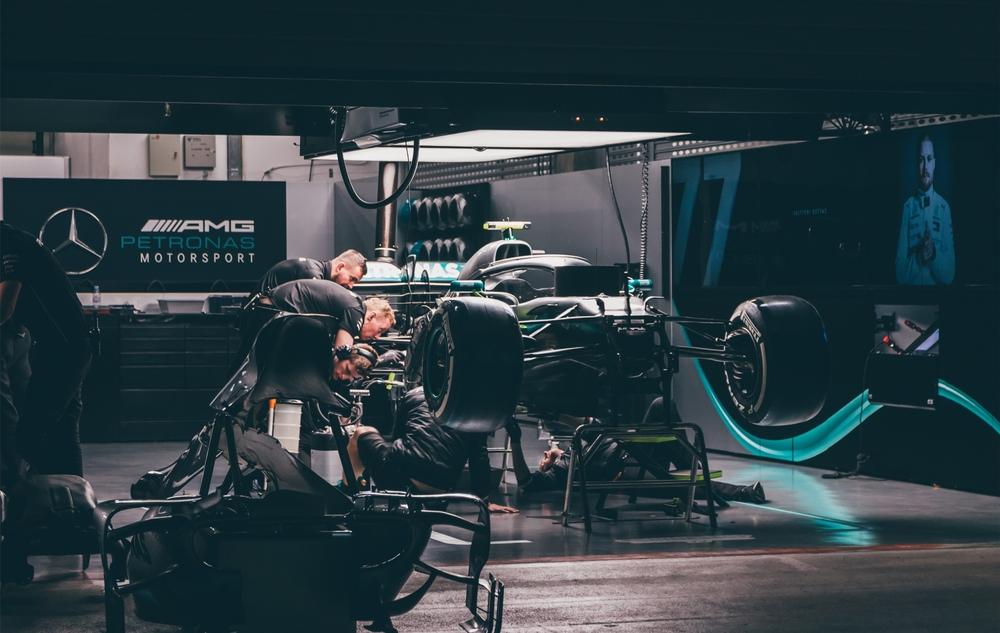
Lightweight construction is now a manufacturing requirement
For many years, lightweight construction was mainly associated with performance cars and specialist vehicle engineering. Today, it is a mainstream requirement across large parts of the automotive industry. Vehicle platforms must support electrification, battery integration, strict safety standards and competitive production costs. At the same time, consumers expect cars to be comfortable, reliable and efficient. These expectations place heavy demands on every part of the design and production process.
When a manufacturer reduces vehicle weight, the benefits can be felt across the entire product. A lighter body structure can help improve range in electric vehicles, reduce energy consumption and make it easier to balance strength with performance. However, lightweight construction is not simply a matter of using thinner materials. It requires a careful combination of material science, structural engineering and joining technology. When manufacturers need reliable fastening methods for demanding vehicle structures, they can just click on for more information about self-pierce riveting and how it supports high-strength joining in modern automotive production.
The challenge is that lightweight materials often behave differently from traditional steel. Aluminum, high-strength steel and mixed-material designs each require a joining process that respects the properties of the material. A method that works well for one structure may not be suitable for another. This is why the transition to lightweight construction is also a transition to more specialized production technology.
Why traditional joining methods are not always enough
Conventional welding has been a cornerstone of automotive manufacturing for decades. It remains important in many areas, but the rise of multi-material vehicle structures has created situations where welding is not always the best solution. Joining aluminum to steel, for example, can be difficult because the materials respond differently to heat. Excessive heat can affect material properties, create distortion or reduce consistency in the finished joint.
Mechanical fastening methods also have limitations when used in demanding lightweight applications. Some require pre-drilled holes, additional preparation or access from both sides of the joint. These steps can slow production, increase complexity and create challenges in high-volume automotive environments. When the goal is to build strong, repeatable joints at scale, the joining process must be both technically reliable and suitable for automated production.
This is where self-pierce riveting has become especially relevant. The process is designed to join sheet materials without the need for a pre-drilled hole. A rivet pierces the upper layer and expands into the lower layer with the support of a die, creating a strong mechanical interlock. Because the process does not rely on melting the materials, it can be well suited to combinations that are difficult to weld.
For automotive manufacturers, that matters. A modern body structure may include aluminum panels, ultra-high-strength steel components and complex castings. Each joining point must perform consistently, not only during production but throughout the lifetime of the vehicle. The joint must handle vibration, load, corrosion exposure and real-world use. A fastening method that supports these demands can become a key enabler of lightweight vehicle architecture.
Multi-material design changes the role of fastening technology
The shift toward lightweight construction has changed the way engineers think about fastening. Joining is no longer a final step that can be treated separately from design. It is part of the vehicle’s structural concept from the beginning. The choice of rivet, die, access equipment and setting system can influence how components are shaped, how production cells are built and how quality is verified.
In multi-material design, the best solution is often the one that offers controlled performance across different combinations of material thickness, strength and geometry. A fastening system must be able to adapt to these variations while maintaining stable joint quality. This is particularly important in electric vehicles, where battery enclosures, underbody structures and crash-relevant components often require a high degree of joining precision.
Self-pierce riveting is valuable because it supports this type of controlled production. The process can be integrated into automated lines and used with equipment designed for repeatability. In high-volume manufacturing, repeatability is not a luxury. It is essential. Even a small inconsistency in the joining process can affect quality, rework rates and production flow.
Fastening technology also needs to support access to difficult areas of the vehicle structure. Modern bodies are often more complex than older designs, with tighter spaces and optimized geometries. This places demands on C-frames, setters, feeding systems and system options that must fit the application rather than force the application to fit the tool. When the fastening system is engineered around the production challenge, manufacturers can keep the lightweight design without sacrificing manufacturability.
Production efficiency depends on more than the joint itself
A strong joint is essential, but it is only one part of the manufacturing equation. In automotive production, speed, uptime, traceability and process control are just as important. A fastening solution must help the production line run smoothly. It must deliver rivets reliably, support tool access, reduce interruptions and make maintenance manageable.
Feed systems are a good example. In a high-volume line, rivets must be supplied continuously and accurately to the tool. Any interruption can affect cycle times and create delays downstream. A reliable feeding setup is therefore not just a supporting component. It is part of the overall productivity of the joining process.
Die management is another important factor. If dies need to be changed, inspected or monitored, the system should support this efficiently. Fast die changes and condition monitoring can help reduce avoidable downtime and protect joint quality. These details may sound technical, but they make a clear difference in real production environments where thousands of joints may be created during each production cycle.
Quality assurance also becomes more important when vehicle structures are lighter and more advanced. Manufacturers need confidence that each joint meets the intended standard. This requires a combination of robust process design, suitable joining elements and controlled equipment. A fastening system that is designed as a complete solution can make this easier because the rivets, dies, setters and supporting equipment are developed to work together.
Lightweight construction requires future-ready assembly thinking
The transition to lightweight construction is not a short-term trend. It reflects a broader transformation in automotive manufacturing. Vehicles are becoming more electrified, more software-driven and more structurally advanced. At the same time, manufacturers must manage cost pressure, supply chain complexity and the need for flexible production systems. Joining technology must therefore support both current vehicle programs and future platform development.
One of the most important lessons from lightweight construction is that no single material or process solves every challenge. The strongest results often come from combining the right materials with the right joining methods. Aluminum may be ideal in one area, ultra-high-strength steel in another and cast structures in a third. The fastening process must make these choices practical in production.
This requires early collaboration between design, engineering and manufacturing teams. If joining technology is considered too late, the result can be unnecessary redesign, difficult access, slower production or compromised joint quality. When it is considered early, the vehicle structure can be optimized around realistic, repeatable and efficient assembly methods.
For automotive companies, lightweight construction is ultimately about balance. The vehicle must be lighter, but also strong. It must be efficient, but also safe. It must be advanced, but also manufacturable at scale. Self-pierce riveting and other modern joining technologies help make that balance possible by giving manufacturers more freedom to work with mixed materials and demanding structures.
As the industry continues to move toward electric vehicles, new body architectures and more sustainable production strategies, the role of fastening will only become more important. Lightweight construction depends on details that many drivers will never see, but those details help define the quality, performance and durability of the finished vehicle. In that sense, the future of automotive manufacturing is not only about new materials. It is also about the technologies that make those materials work together.


 Bankroll management is always underrated as a necessary skill for making money at Poker. With excellent bankroll management, even a tiny edge over the rest of the competition will eventually grow into big profits. But without it, it doesn’t matter how good you are – even a Poker Master will simply always end up broke. Variance of luck is the main enemy of the poker player, so it’s always important to make sure your bankroll is big enough for the level you’re playing to absorb any downswings. For live cash No Limit Hold ‘Em, you’ll want to go in with at least 30 buy-ins (100 big blinds) for the level you’re playing at. For online cash games, where your edge is likely to be smaller, it’s probably wiser to bump that up to around 50. You should also take a little big extra if you’re playing Pot Limit Omaha, as the variance is significantly higher in that variant of poker. For tournaments, it’ll depend on the size of the field. If you’re playing local tournaments which only attract around 60-80 entries, then around 50 buy-ins should be enough. However, if you’re playing huge field tournaments live or online which attract hundreds or even thousands of entrants, you’ll want to up that number significantly. Finally, make sure you do your research and pick your game and your casino. Always check the rake level and availability of the game you want to play. You don’t want to bankroll yourself for £10 tournaments only to find out that they only run once a day and end up playing games you aren’t rolled for.
 Nitrous Oxide
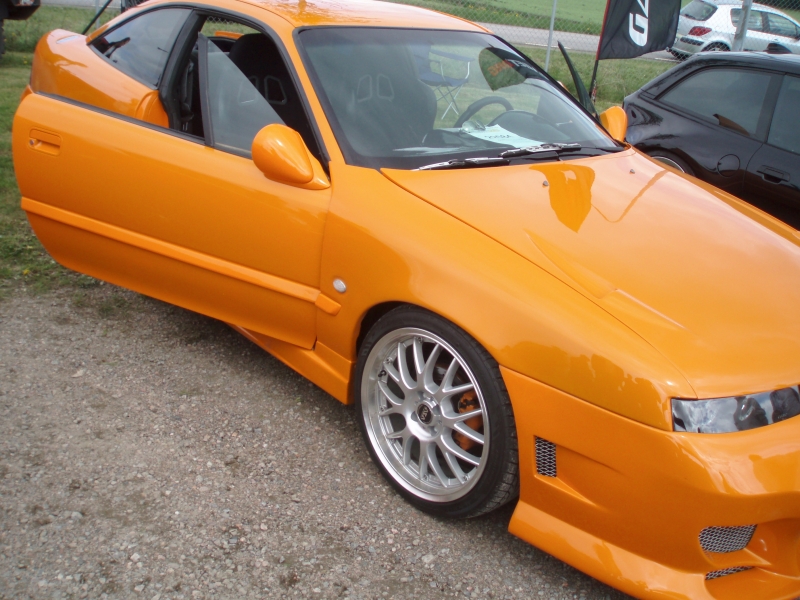 Take it AwayGreat modding is as much about what you take off as about what you add on. Standard spec body panels, windows and seating can all be removed and lighter replacements used instead. Some enthusiasts drill numerous holes to remove unnecessary metal (remember not to drill through anything which affects safety or performance) in order to reduce weight.Lower the SuspensionA classic and popular modification, there are numerous ways to bring your chassis closer to the deck. A quick search online reveals plenty of kits, bits and tools for DIY efforts, or, if you’re not so good with the spanners, don’t worry. The Internet is crammed with
 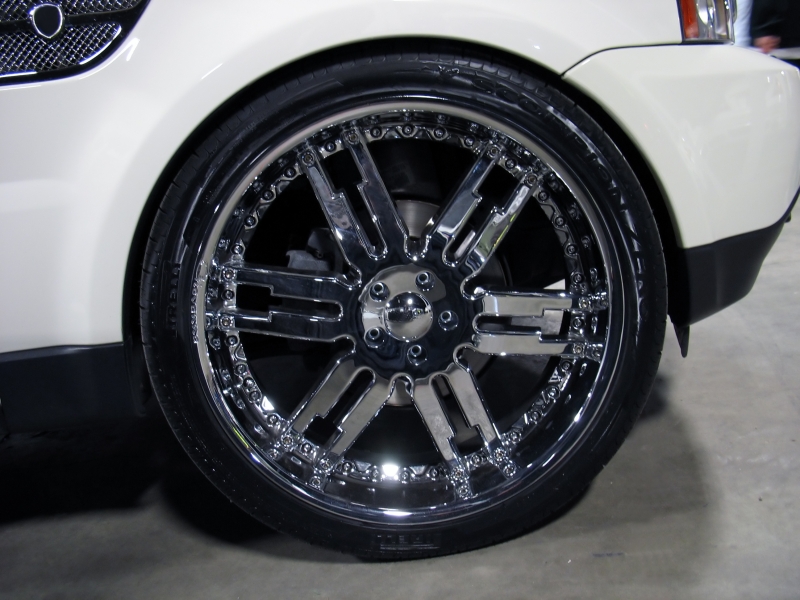 A Ratchet SetA quality ratchet set is absolutely critical, as it serves a variety of purposes. Handling both standard and metric bolts, ratchets are employed in nearly every facet of car modifications in one way or another. Some of the best ratchet sets will include extensions and flexible handles to access hard-to-reach areas. So, it is a good idea to shop around on the Internet before deciding upon a specific brand.Car MoversIt is challenging to move a car around within a closed environment. Not only can this be very inconvenient and time consuming, but a certain amount of danger arises when working underneath any heavy object such as an undercarriage or an engine. Much of the risk can be taken away when a car mover from Stringo is used. Able to support a massive amount of weight and very flexible in terms of the tasks that can be accomplished, these devices are another must-have item within the workplace.Chain HoistsIf you are looking to perform car modifications which require a substantial amount of heavy lifting, a